Sleeping Pads
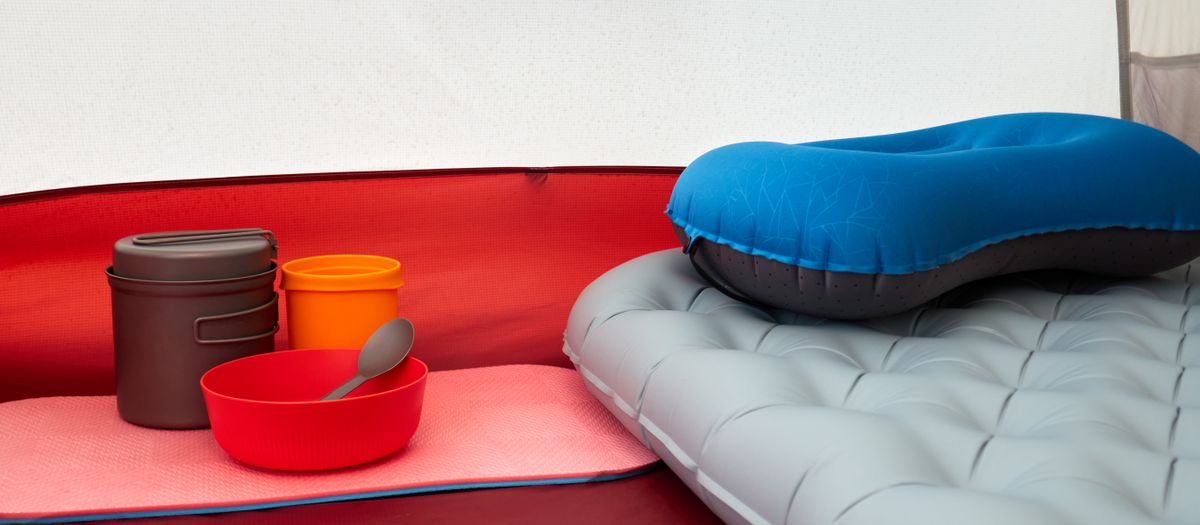
The pad is the half of the sleep system most first-timers underestimate — and the cold pad ruins more nights than a thin bag does. This silo compares backpacking sleeping pads on the specs that decide warmth and weight: ASTM F3340 R-value tiers by season, air vs self-inflating vs closed-cell foam, weight and packed size, and width and length. Specs are verified against manufacturer details and current retailer listings; no hands-on testing is claimed.
Warmth is the bag and the pad as one system. Read this silo alongside the bags & quilts hub, and run your overnight low through the sleep-system matcher to set the pad R-value and bag rating together.
The spec that matters: ASTM F3340 R-value
A pad has one job that decides your night — stopping heat draining into the cold ground — and one number measures it: R-value, tested under the ASTM F3340 standard. Higher R-value means more resistance to that conductive heat loss. Before the standard existed, every brand measured R-value its own way and the numbers were not comparable; F3340 fixed that with a single hot-plate test, so today an R-3 from one maker means the same as an R-3 from another. That makes R-value the one pad spec you can trust to compare like for like, and the spine of how to choose. As a working guide: R-2 and under suits warm summer nights, R-2 to R-4 covers most 3-season trips, and R-4.5 and up is for cold-weather and winter ground. Size to the coldest ground you will sleep on, not the average night.
The three pad types
Pads sort into three families, and the right one is a trade-off between weight, durability and comfort. Knowing which family fits your trips is most of the decision.
Air pads
An inflatable air pad gives the best warmth-to-weight and packs down smallest, which is why it dominates ultralight kits. Modern insulated air pads use internal baffles, reflective films or synthetic fill to reach high R-values at very low weight, so a winter-capable air pad can still be light and compact. The trade-offs are real: they can puncture (carry a patch kit), they cost the most, and some sleepers find them noisy or unstable. For most backpackers chasing the warmth-to-weight balance, an insulated air pad is the workhorse.
Self-inflating pads
A self-inflating pad combines open-cell foam with air: open the valve and the foam expands and draws air in, then you top it off by mouth. They are tougher and more comfortable than bare air pads and a minor puncture just makes them firmer rather than flat, but they are heavier and bulkier for the same warmth. They are a sensible middle ground for car-camping-adjacent trips and anyone who values durability and comfort over the last few grams.
Closed-cell foam pads
A closed-cell foam pad is a simple sheet of dense foam — cheap, effectively indestructible, and impossible to puncture, so it cannot fail you in the night. The cost is bulk (it straps to the outside of the pack) and a firm, modest-R-value sleep. Its best role for many backpackers is as the bottom layer of a stack, adding its R-value (and a guaranteed backup) under an air pad for cold trips, as the easy-win box above describes.
Weight, packed size, width and length
After R-value, weigh the pad on weight and packed size — they decide how it rides in a pack already sharing space with the bag, liner and pillow. Air pads win on both; foam wins on neither but never fails. Then check width and length: a pad too narrow lets your shoulders or hips slide onto the cold ground, which is the warm-bag-cold-pad mistake in miniature, and a pad too short leaves your feet off the insulation. Regular and long lengths and wide versions exist for a reason. Side sleepers and anyone who tosses should also look at thickness — a thicker pad keeps hips and shoulders off the ground and sleeps far more comfortably, at a small weight cost.
Why a cold pad sleeps cold under a warm bag
It is worth sitting with the mechanism, because it is the single most counter-intuitive thing about staying warm on the trail. The bag feels warm in your hands because its loft traps a thick layer of still air. But you lie on the bag, and your body weight squashes that loft flat to nearly nothing wherever you press down on it. The underside of the bag is therefore doing almost no insulating, no matter how good the bag is — and the cold ground, which conducts heat far faster than air, is now in near-direct contact with your back, hips and shoulders, drawing your body heat straight into the earth all night. The pad is the only barrier left in that path, and its R-value is the measure of how well it blocks the drain. This is why an expensive, highly-rated bag over a thin summer pad can still give you a cold, sleepless night, and why we always size the two together.
Inflating and caring for a pad
A couple of habits make a pad warmer and last longer. Inflate an insulated air pad with a pump sack rather than by mouth where you can — breath carries moisture that, over many nights, can dampen the internal insulation and shave its real-world warmth. Top up the firmness to suit your weight and sleep style: too soft and your hips bottom out onto the cold ground, too firm and it sleeps like a drum. Between trips, store the pad unrolled with the valve open so any trapped moisture can escape and the materials are not held under stress. Carry a small patch kit for air pads — a slow leak found at 2am is a five-minute fix if you are prepared and a long cold night if you are not.
The pad is only half the system
The reason the pad matters as much as the bag is simple physics: lying down crushes the bag's underside flat, so the pad's R-value is the only thing blocking heat loss into the ground — a cold pad ruins more nights than a thin bag does. Choose the pad and the bag as a matched pair, and let the sleep-system matcher set the R-value and the bag Comfort rating together for your overnight low. To see how light you can responsibly go, run candidate pads and bags through the warmth-to-weight comparator, and for the full beginner walkthrough read the sleep-system guide.
Featured guides
The current published guides in this silo. More land each batch.
Landing next: R-value explained, Best sleeping pad for side sleepers, Air vs foam vs self-inflating pads, and Best insulated winter pad.
Frequently asked questions
What R-value do I need by season?
As a rough guide: R-2 and under for warm summer nights, R-2 to R-4 for most 3-season trips, and R-4.5+ for cold-weather and winter ground. R-value is an ASTM F3340 lab figure; real-world warmth varies with the sleeper, the bag, the shelter and the conditions.
Why does the pad matter as much as the bag?
When you lie down you crush the insulation beneath you, so the bag does little to stop heat draining into the cold ground. The pad's R-value is what blocks that conductive heat loss — which is why a warm bag on a cold pad still sleeps cold, and why we size the two together.
Air, self-inflating, or closed-cell foam?
Air pads are lightest and most packable for their warmth but can puncture. Self-inflating pads are tougher and comfier but heavier. Closed-cell foam is cheap and indestructible but bulky and firm. It is a trade-off between weight, durability and comfort.