Best Cold-Weather Sleeping Bags
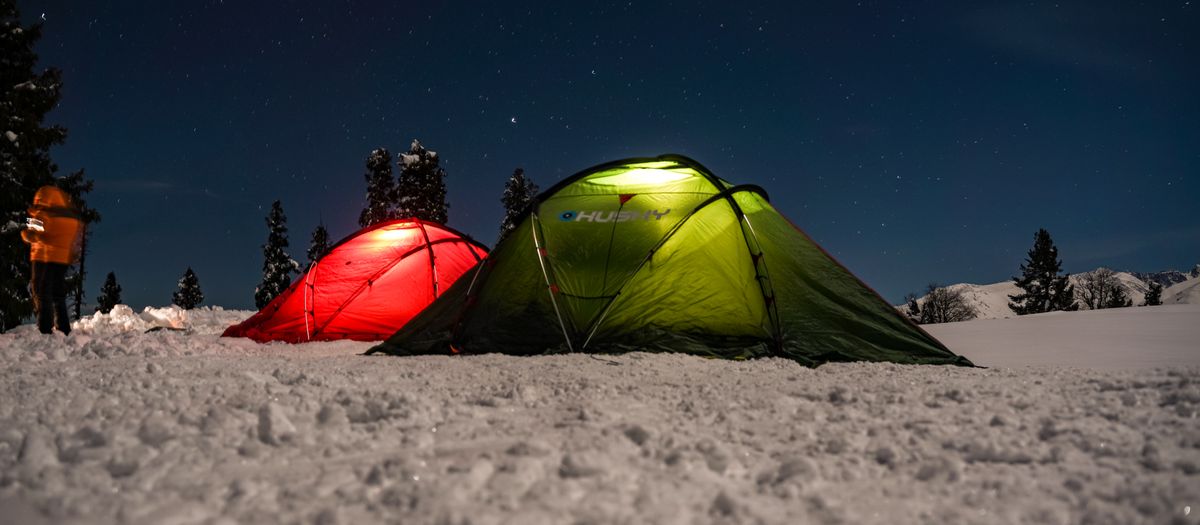
A cold-weather sleeping bag is judged on one thing above all: an ISO 23537 rating you can trust for the nights you actually face, at a weight you can still carry. This guide compares winter and shoulder-season bags on temperature rating, down vs synthetic fill, fill power, weight and packed size, across five categories: best overall, best winter/expedition, best sub-zero, best budget and best synthetic. Verified picks appear in each slot once real product data is in.
Cold-weather warmth is a system, not a single bag. The bag holds heat in; the pad stops the cold ground from stealing it. Pair a cold-weather bag with a winter-rated pad — see the best backpacking sleeping pad guide — and use the sleep-system matcher to set the bag rating and pad R-value for your overnight low together.
Specs verified against manufacturer details and current retailer listings — no hands-on testing claims. Temperature ratings are lab figures (ISO 23537 Comfort/Limit); real-world warmth varies with the sleeper, the pad, the shelter and the conditions, and no rating is a survival guarantee. For cold or high-altitude trips, build in margin and buy to the Comfort rating, not the Limit.
| Best for | Temp rating (ISO) | Fill | Fill power | Weight | Shape |
|---|---|---|---|---|---|
| Best overall cold-weather bag | 0°F (cold-weather) | RDS-certified down | High-loft down | Lightweight for 0°F | Mummy |
| Best winter / expedition bag | 0°F (winter) | Down | High-loft down | Moderate (warmth-focused) | Mummy |
| Best sub-zero bag | -30°F (manufacturer rating) | TechLoft Silver synthetic | n/a (synthetic); 122 oz fill weight | 9 lb 9 oz | Mummy, 86 × 38 in |
| Best budget cold-weather bag | 0°F (cold-weather) | Down | High-loft down | Lightweight | Mummy |
| Best synthetic cold-weather bag | 3-4 season (cold-weather) | Synthetic (two-layer shingle) | N/A (synthetic insulation) | Moderate | Mummy |
Our top picks
Best overall cold-weather bag: Naturehike 0 Degree RDS Down Mummy Sleeping Bag for Cold Weather Backpacking

Best overall cold-weather bag
Naturehike 0 Degree RDS Down Mummy Sleeping Bag for Cold Weather Backpacking
Naturehike
- Temp rating (ISO): 0°F (cold-weather)
- Fill: RDS-certified down
- Fill power: High-loft down
- Weight: Lightweight for 0°F
- Packed size: Compact (stuff sack incl.)
- Shape: Mummy
The Naturehike 0°F RDS down bag offers true cold-weather warmth with responsibly-sourced down at a strong price. It is the best overall cold-weather pick for winter-curious backpackers.
Last checked 2026-10-09
Best winter / expedition bag: QEZER Down Mummy Sleeping Bag for Adults, 0°F Cold Weather Expedition Bag

Best winter / expedition bag
QEZER Down Mummy Sleeping Bag for Adults, 0°F Cold Weather Expedition Bag
QEZER
- Temp rating (ISO): 0°F (winter)
- Fill: Down
- Fill power: High-loft down
- Weight: Moderate (warmth-focused)
- Packed size: Compact (stuff sack incl.)
- Shape: Mummy
The QEZER 0°F down mummy carries more fill for sustained winter warmth on cold expeditions. It is the best winter/expedition pick among the value down bags on Amazon.
Last checked 2026-10-09
Best sub-zero bag: Browning Camping Denali -30° Mummy Sleeping Bag, Charcoal/Gray

Best sub-zero bag
Browning Camping Denali -30° Mummy Sleeping Bag, Charcoal/Gray
Browning Camping
- Temp rating (ISO): -30°F (manufacturer rating)
- Fill: TechLoft Silver synthetic
- Fill power: n/a (synthetic); 122 oz fill weight
- Weight: 9 lb 9 oz
- Packed size: Compression stuff sack included (dimensions not listed)
- Shape: Mummy, 86 × 38 in
Browning's Denali is a -30°F-rated synthetic mummy with TechLoft Silver insulation (122 oz fill), a two-layer offset construction with chest and zipper baffles, a 210T ripstop shell and an 86 x 38 in cut — at 9 lb 9 oz it is a base-camp or car-camping bag, not a backpacking one.
Last checked 2026-10-09
Best budget cold-weather bag: Naturehike 0 Degree Down Mummy Sleeping Bag, Budget Cold-Weather Backpacking Bag

Best budget cold-weather bag
Naturehike 0 Degree Down Mummy Sleeping Bag, Budget Cold-Weather Backpacking Bag
Naturehike
- Temp rating (ISO): 0°F (cold-weather)
- Fill: Down
- Fill power: High-loft down
- Weight: Lightweight
- Packed size: Compact (stuff sack incl.)
- Shape: Mummy
This Naturehike 0°F down mummy is the lowest-priced true cold-weather down bag here. It is the best budget cold-weather pick for backpackers extending into winter on a tight budget.
Last checked 2026-10-09
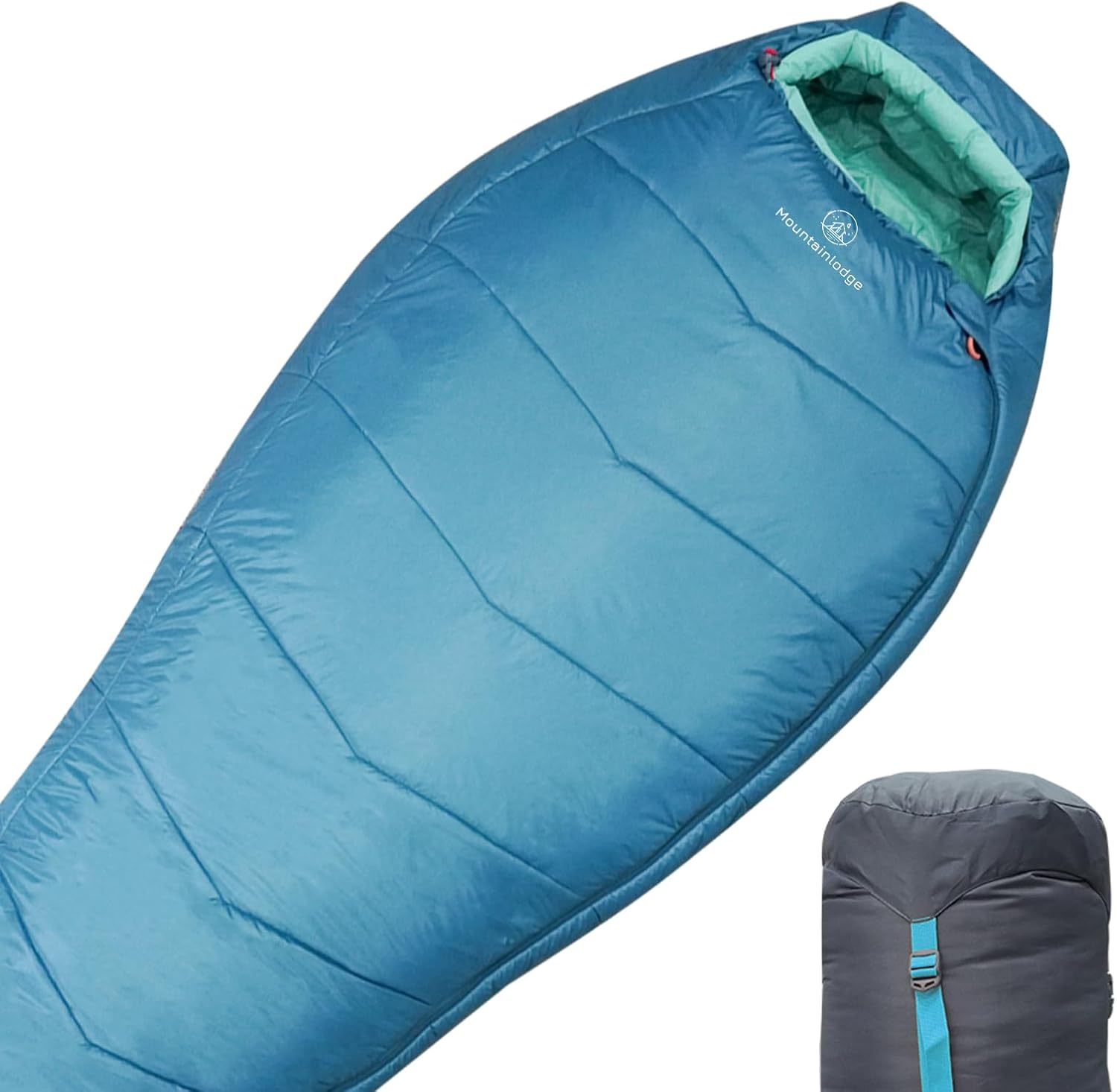
Best synthetic cold-weather bag: Mountainlodge 3-4 Seasons Two-Layer Shingle Synthetic Cold-Weather Sleeping Bag
Best synthetic cold-weather bag
Mountainlodge 3-4 Seasons Two-Layer Shingle Synthetic Cold-Weather Sleeping Bag
Mountainlodge
- Temp rating (ISO): 3-4 season (cold-weather)
- Fill: Synthetic (two-layer shingle)
- Fill power: N/A (synthetic insulation)
- Weight: Moderate
- Packed size: Compresses
- Shape: Mummy
The Mountainlodge two-layer synthetic bag keeps insulating when damp and resists cold-weather condensation better than down. It is the best synthetic cold-weather pick for wet or humid winter conditions.
Last checked 2026-10-09
How to choose a cold-weather sleeping bag
Cold-weather backpacking raises the stakes on every spec, because the margin for a poor choice shrinks as the temperature drops. The specs that decide a winter or shoulder-season bag are the same as for any bag — ISO 23537 temperature rating, fill type, fill power, weight and packed size, shape — but the way you read them changes. You buy more conservatively to the Comfort rating, you weigh down-versus-synthetic against condensation and damp, and you accept more weight to get the warmth. Spec-by-spec, the right cold-weather bag is the one whose ISO Comfort rating sits at or below your coldest expected low with margin, paired with a pad that carries the under-body warmth.
And cold-weather warmth is a system above all else. The colder the night, the harder the ground pulls heat out of you, so the pad matters more in winter than in any other season. A winter bag on a summer pad is the classic cold-night failure — the bag is doing its job while the ground wins underneath. Treat the bag rating and the pad R-value as one paired figure for the trip.
ISO 23537 rating: buy to Comfort, add margin
Reputable cold-weather bags carry ISO 23537 ratings: a Comfort figure (lowest temperature a standard cold sleeper sleeps comfortably), a Limit figure (lowest temperature a standard warm sleeper sleeps curled at the edge of shivering) and an Extreme figure that is survival-only and must never be used to choose a bag. For cold trips the discipline is simple and non-negotiable: buy to the Comfort rating, not the Limit, and add margin on top. Spec-by-spec, a bag the tag calls "0°F" may carry an ISO Comfort rating closer to 10°F — pick the Comfort number at or below your coldest expected overnight low, then add buffer for wind, a clear sky, altitude, fatigue and the end of a long day when your body has less heat to spare. These are lab figures; real-world warmth varies with the sleeper, the pad, the shelter and the conditions, and no rating is a survival guarantee. For cold or high-altitude trips, build in margin rather than shopping to the edge of the rating.
Fill type: down vs synthetic in the cold
At sub-freezing temperatures the down-versus-synthetic trade-off sharpens. Down gives the most warmth for the least weight and pack size, which matters enormously when a cold-weather bag is already heavy and bulky — a 0°F synthetic bag can be punishing to carry. The risk is moisture: over multi-day winter trips, body vapour and tent condensation can migrate into the bag and slowly rob loft, so down demands care, a vapour-aware setup and good shelter ventilation. Synthetic holds far more of its warmth when damp, dries faster and costs less, which makes it the safer choice for wet shoulder seasons, snow-melt conditions and condensation-heavy single-wall shelters. Spec-by-spec, choose down for dry cold where weight leads and you can keep it dry; choose synthetic for wet, condensation-prone cold where reliability leads.
Fill power and loft
For down cold-weather bags, fill power (the loft of the down, typically 600 to 900+) decides how much down weight it takes to reach a cold rating. Higher fill power reaches a given warmth with less down, so an 850-fill winter bag is lighter and more compressible than a 650-fill bag at the same ISO Comfort rating. It does not make the bag warmer than its rating — two bags at the same Comfort figure are rated the same — but in the cold, where total fill is high, the weight saving from high fill power is largest in absolute terms. That is why premium expedition bags pay up for 800+ fill: it keeps an otherwise heavy bag carryable.
Weight, packed size and draft features
Cold-weather bags are heavier and bulkier than three-season bags by necessity, so warmth-to-weight is where the money goes. Beyond the headline weight, the warmth-retention features matter in the cold: a fitted hood, a draft collar (an insulated baffle around the shoulders that seals warm air in), draft tubes behind the zip and a snug footbox all help the bag hold its rated warmth. Spec-by- spec, two bags at the same ISO Comfort rating can feel different in practice depending on how well these seals are executed — read for a draft collar and hood on anything rated for hard cold. Expect a true winter bag to weigh meaningfully more than a three-season bag; that weight is the cost of the rating.
Shape: mummy for cold
For cold weather the mummy shape is close to mandatory. A mummy cut minimises dead air inside the bag, so your body heats less volume and the bag is warmer per gram — with a hood that seals the single biggest heat-loss area, your head. Semi-rectangular bags trade warmth efficiency for room and are a harder sell in true cold. Quilts, which rely on the pad for under-body warmth and have no back insulation or hood, are a warm-and-mild-weather tool, not a sub-freezing one for most people. Spec-by-spec, for cold nights a hooded mummy is the warmth-efficient choice.
The pad is half the cold-weather system
This is the spec relationship that defines cold-weather sleeping. On freezing ground the pad's R-value, not the bag, is what stops conductive heat loss, because your body crushes the bag's underside flat. Spec-by-spec, pairing a 0°F bag with a 2.0 R-value summer pad leaves you exposed to the cold ground the bag cannot cover — winter ground calls for an R-4.5+ pad, and many cold campers stack a closed-cell foam pad under an insulated air pad for additive R-value and puncture backup. Size the two together: pick the ISO Comfort rating for your low, then pick the pad R-value for the same season. The best backpacking sleeping pad guide covers the R-value side, the sleep-system matcher sets the bag rating and pad R-value for your overnight low together, and a sleeping bag liner can add a few claimed degrees of margin.
Sub-zero and "warmest" bags
At the extreme cold end — sub-zero and expedition ratings — bags carry very high fill weights, full draft systems and the heaviest carry weights on the market, and the "warmest sleeping bag in the world" style claims belong to expedition-grade down bags rated well below 0°F. Military extreme-cold and modular sleep systems take a different route, layering two bags inside a bivy to cover a wide temperature band at the cost of weight and bulk. Spec-by-spec, the sub-zero slot here is anchored to the lowest defensible ISO Comfort rating in the set; treat every extreme figure as a lab rating with margin built in by you, never as a survival promise.
Moisture and condensation in the cold
Cold-weather sleeping has a moisture problem that warm-weather sleeping does not. Over consecutive freezing nights, body vapour and tent condensation can work into the bag's insulation and slowly cut its loft, and down is more vulnerable than synthetic because wet down collapses. This is why the down-versus-synthetic call sharpens in winter: down's weight saving is real, but it has to be kept dry through ventilation, a vapour-aware setup and drying the bag out when the sun allows; synthetic tolerates damp far better at a weight cost. Spec-by-spec, factor expected moisture into the fill choice — dry cold favours down, wet or condensation-heavy cold favours synthetic — because a bag that loses loft mid-trip no longer meets its rating.
Common cold-weather mistakes
The mistake that ruins the most cold nights is pairing a winter bag with a summer pad. Spec-by-spec, on frozen ground a 0°F bag on a 2.0 R-value pad still sleeps cold because the ground is pulling heat out from underneath — winter ground needs R-4.5+, often built by stacking foam under an air pad. The second mistake is buying to the Limit (or worse, the Extreme) rating; in the cold, shop to the Comfort rating and add margin. The third is going too light on draft features — a winter bag without a draft collar and a fitted hood leaks heat at the shoulders and head no matter the fill weight. The fourth is relying on the down staying dry over a long trip without a plan to ventilate and dry it.
Care for a cold-weather bag
A cold-weather bag holds a lot of fill, so loft preservation matters more, not less. Store it loosely in a large breathable sack at home and never leave it compressed for long, because crushed fill loses the loft that carries the cold rating. On the trail, air and dry the bag whenever conditions allow to shed accumulated moisture. Keep it clean — body oils degrade loft, which is one more reason a sleeping bag liner earns its small weight on a winter trip, both for the few claimed degrees of margin and for protecting an expensive bag. Spec-by-spec, a lofted, dry bag meets its rating; a damp, crushed one does not.
How we frame the picks
Each slot is anchored to measurable specs. "Best overall" balances ISO Comfort rating, fill power and weight for general cold-weather backpacking; "best winter/expedition" leads on the coldest defensible Comfort rating with full draft features; "best sub-zero" is the lowest ISO Comfort rating in the set; "best budget" is the lowest price that still hits a usable cold rating; and "best synthetic" leads on wet-cold reliability for the money. Comparisons here are spec aggregation from manufacturer details and ISO 23537 figures, not personal testing. Verified picks fill each slot once real product data is in.
Frequently asked questions
What temperature rating do I need for winter backpacking?
For sustained sub-freezing nights, look at bags with an ISO 23537 Comfort rating at or below your coldest expected low, and add margin. Comfort and Limit are lab figures; real-world warmth varies with the sleeper, the pad, the shelter and the conditions, and no rating is a survival guarantee. Verified picks land on this page once real product data is in.
Is a cold-weather bag enough on its own?
No — the pad carries half the warmth. A winter bag on a low-R-value pad still sleeps cold because the ground pulls heat straight out of you. Pair a cold-weather bag with a winter-rated pad (R-4.5+) and size them together. See the best backpacking sleeping pad guide and the sleep-system matcher.
Down or synthetic for cold-weather trips?
Down gives the most warmth for the least weight and pack size, which matters when a cold-weather bag is already heavy — but it loses loft when wet. Synthetic holds more warmth when damp and costs less, a real advantage in wet or condensation-prone winter conditions. It is a trade-off between weight and wet-weather reliability.